
Diagnosis.Treatment.Follow-up. — Dr. Farnaz Boostani
Internal Medicine Specialist; Subspecialist in Medical Oncology, Hematology and Stem Cell Transplantation Tabriz
Understand first, then decide; calmly, one step at a time.
Dr. Farnaz Boostani is an internal medicine specialist and a subspecialist in medical oncology, hematology and stem cell transplantation in Tabriz, which means blood diseases and cancer in adults. If a test result has worried you, or you have just heard a diagnosis of a blood disease or cancer, this site helps you see what the steps are, what is normal and what is urgent. The treatment plan differs from patient to patient and is set after a conversation and a review of your records.
More about the doctor
From an abnormal result to a treatment plan.
Every patient has their own plan. The right plan is set after a conversation, an examination and a review of your tests and scans. These pages are only a general introduction.
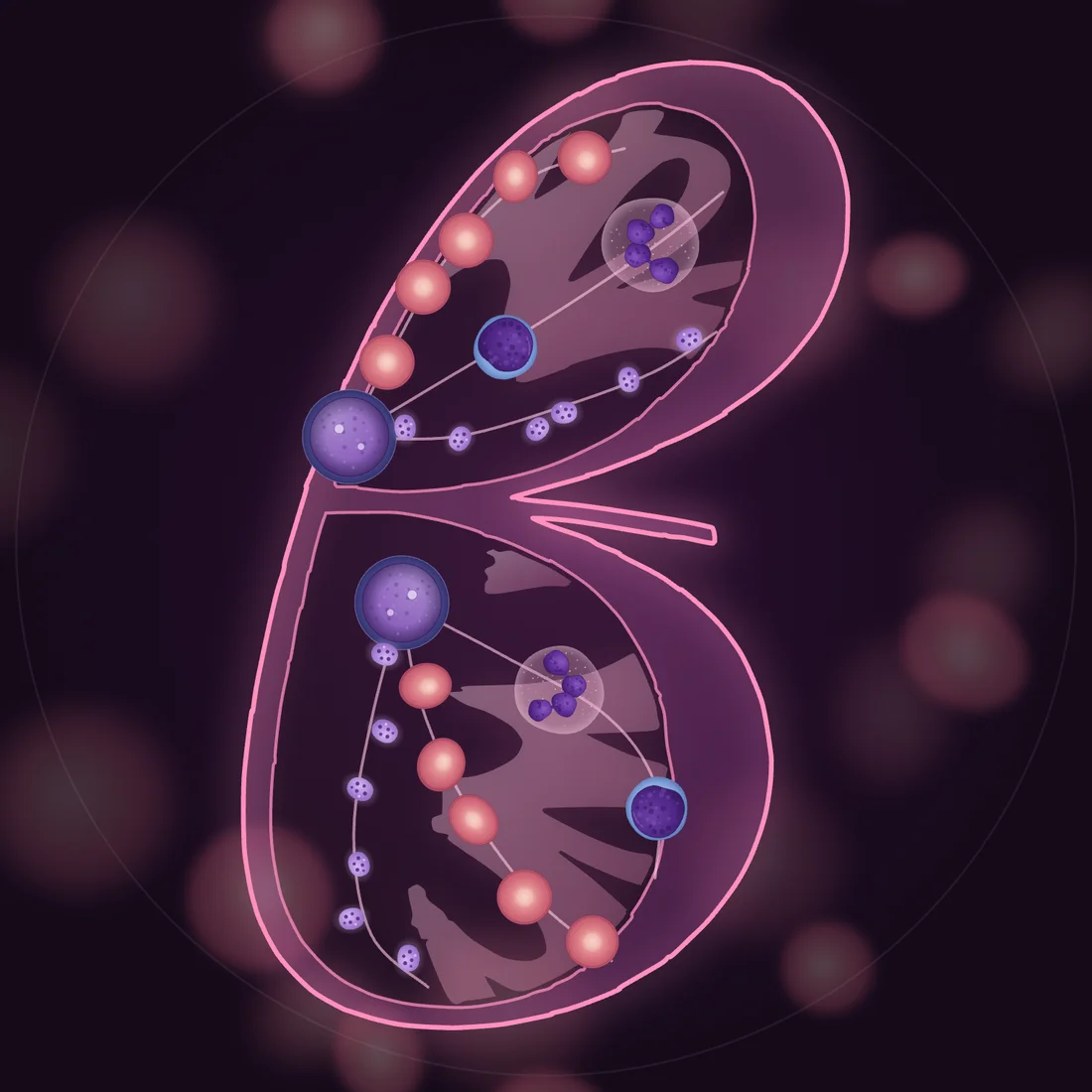
Blood disorders
Anaemia, a low platelet count, bleeding and clots are blood disorders. Many abnormal blood test results have a cause other than cancer, but the cause must be found. Here you can read what is checked and when to get urgent help.
Read moreBlood cancers
Leukaemia, lymphoma and myeloma are the three main groups of blood cancer. Here you can read what each means, how they are diagnosed and what treatments are in general. The type and stage of the disease affect everything.
Read moreBreast cancer and other tumours
Here you can read where breast cancer begins, how it is diagnosed, what hormone receptors and HER2 mean and what the treatments are in general. At the end there is a general look at other tumours.
Read moreChemotherapy and drug therapies
Chemotherapy, hormone therapy, targeted therapy and immunotherapy are the four main groups of drug treatment for cancer. Here you can read what each is, how it is given, what side effects it has and when to tell your treatment team.
Read moreStem cell transplant
A stem cell transplant is a treatment option in some blood diseases and cancers. Here you can read how an autologous and a donor transplant differ, what the stages are, what risks there are and who a transplant may suit.
Read more
From the first conversation to follow-up
Five steps, one after another. The plan is different for every patient, but at each step you know what comes next and why.
- Step 1 of 5.
Conversation and record review
At the first visit the doctor asks about your history, your symptoms and the medicines you take, and goes through earlier tests and reports. Ask every question you have.
- Step 2 of 5.
Tests and biopsy
Depending on your situation you may need blood tests, imaging or a biopsy so the diagnosis is clear. Sometimes your earlier results are enough.
- Step 3 of 5.
The treatment plan
The doctor explains the findings and goes through the options with you. The plan differs from patient to patient, and you decide together.
- Step 4 of 5.
The course of treatment
Treatment follows the plan that was agreed. Before it starts, you are told about possible side effects and when to call the doctor.
- Step 5 of 5.
Follow-up
After treatment, regular visits and tests continue so that your health stays under watch.
You are not alone on this path.
Treatment is more than visits and medicines. From blood draws at home and imaging to medicines, referrals and rehabilitation, the support team coordinates the details so you and your family spend less time running around.
Lab tests and blood sampling at home
Quick lab appointments and results, with the support team following up on your results.
Medical imaging and ultrasound
Quick appointments and results, second reads of images, and reports sent to your doctor.
Pharmacy and specialty medicines
Help getting specialty medicines. The pharmacy name will be added once the doctor confirms it.
Quick appointments and referral to specialists and sub-specialists
If you need another doctor or specialty, the support team books the appointment and refers you quickly.
Rehabilitation and wellbeing
The support team books your appointments and refers you to rehabilitation and health specialists.
Specialist treatment and rehabilitation at home
When getting out is hard, part of treatment and rehabilitation comes to you.
Only the items marked "free" are provided at no cost. This number is for appointments and arranging services. It is not a medical emergency line; if it is urgent, call 115 or your own treatment team.
What is worrying you?
Tap what is closest to your situation to reach the matching page. This list does not diagnose anything; it only takes you to the right page. If yours is not listed, call us for guidance.
- Abnormal blood test result
- Anemia that does not improve
- Bruising or bleeding for no reason
- Enlarged lymph node
- A new cancer diagnosis
- Wanting a second opinion
- Starting chemotherapy
A fever during chemotherapy is urgent. Read the urgent signs
Simple answers to the first questions.
My blood test is abnormal. Does that mean I have cancer?
Not necessarily. Many blood test changes have a simple cause, such as iron deficiency, an infection or a medicine. But some need a doctor to look into them. Do not interpret the result yourself; bring it to the visit together with your other records.
What should I bring to the first visit?
All your tests, imaging reports and files (ultrasound, CT, MRI, PET and so on), the pathology report if you had a biopsy, a list of the medicines and supplements you take, records of earlier treatment, your insurance booklet and ID. Bring a companion if you have one. If something is missing, come anyway; the doctor will say what is needed.
What are the side effects of chemotherapy? Will I lose my hair?
Side effects depend on the medicine and on each patient. Not every medicine causes hair loss, and for many side effects there is a way to prevent or control them. Before you start, the doctor tells you which ones are likely for you and what to do in each case.
I have a fever in the middle of chemotherapy. What do I do?
A fever during treatment is urgent. Call your doctor or treatment center right away, or go to the emergency department (115 in Iran). Do not take anything to bring the fever down before you call, because it can hide it.
What is a stem cell transplant? Does everyone need one?
In a transplant, blood-forming stem cells are replaced; they come either from the patient or from a donor. Not every patient needs one. Whether a transplant suits someone is decided after a full review and with the treating team.
Do you perform the transplant here?
The transplant route, whether it is done at this center or by referral to another, will be set by the doctor and announced soon.
Can I book for a second opinion?
You can book for a second opinion and bring your records. The conditions, and whether a remote review is possible, will be set by the doctor.
Do you work with insurance?
The list of insurers will be announced soon.
These answers are general and do not replace your doctor's advice for your situation.
The first step, a calm conversation.
Book an appointment or talk to support. Either way, we are with you.
Support number